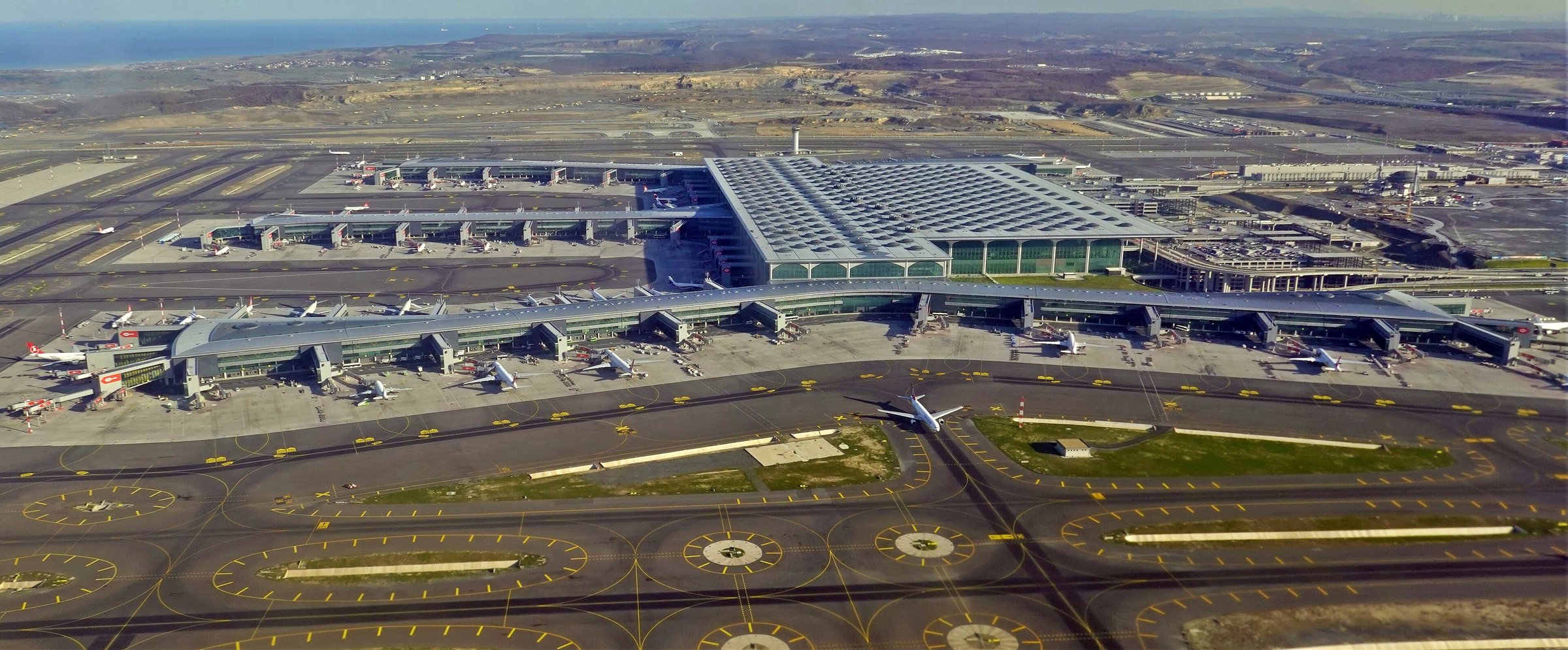
Istanbul Airport terminal

Aviation · infrastructure and data · Aug 2026

The airport built on top of coal pits

An airport was built across 7,600 hectares of abandoned open-cast mines and 70 quarry lakes. Seven years later it is the world's 8th busiest and its most connected. This page is how that happened — from the tender to the move to the metro — with every step measured against EUROCONTROL's own daily records.

7,600 haof ground — former lignite pits and 70 lakes
€10.2 bnto build, plus €22.2 bn in rent over 25 years
29 hoursto move in — 45 had been allowed
84.5 mpassengers (2025) · 8th in the world

Chronology

From a tender to the world's most connected airport.

The figure under each chapter comes either from EUROCONTROL's daily record or from a cited statement.

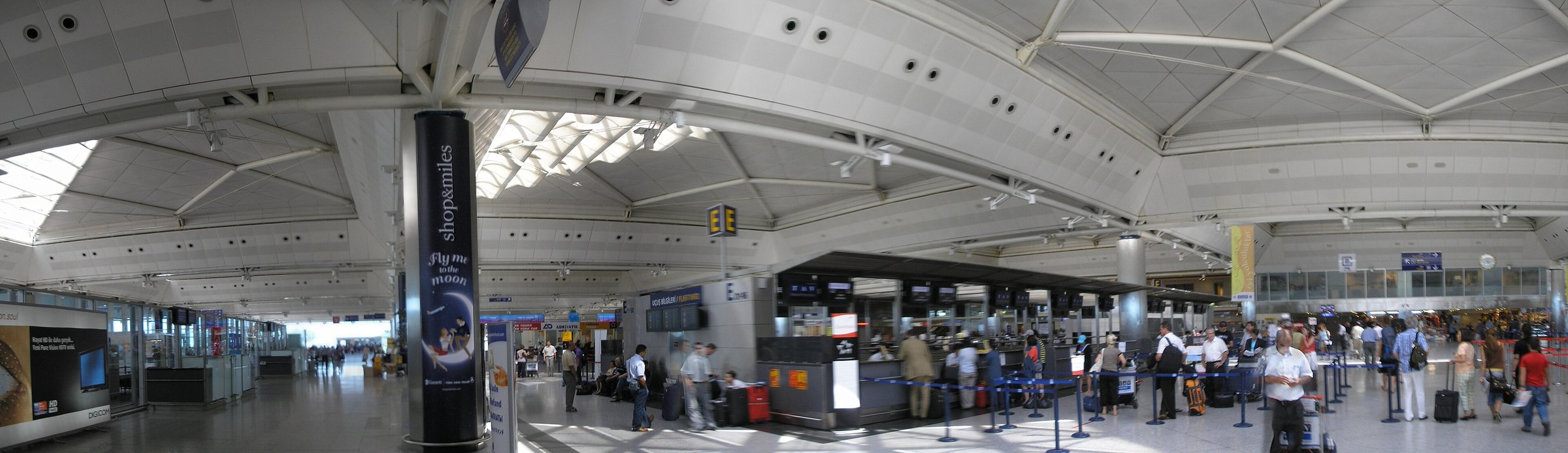
Istanbul Atatürk Airport in 2007

May 2013 · the tender

Atatürk had run out of room

Atatürk Airport had been swallowed by the city: two intersecting runways and nowhere to grow. In May 2013 the Cengiz–Kolin–Limak–Mapa–Kalyon consortium won the tender for a replacement. The model was build-operate-transfer: the company builds it, runs it for 25 years, then hands it to the state.

The build cost €10.2 billion, on top of €22.2 billion in rent owed to the state across those 25 years. It is the largest privately operated airport in the world.
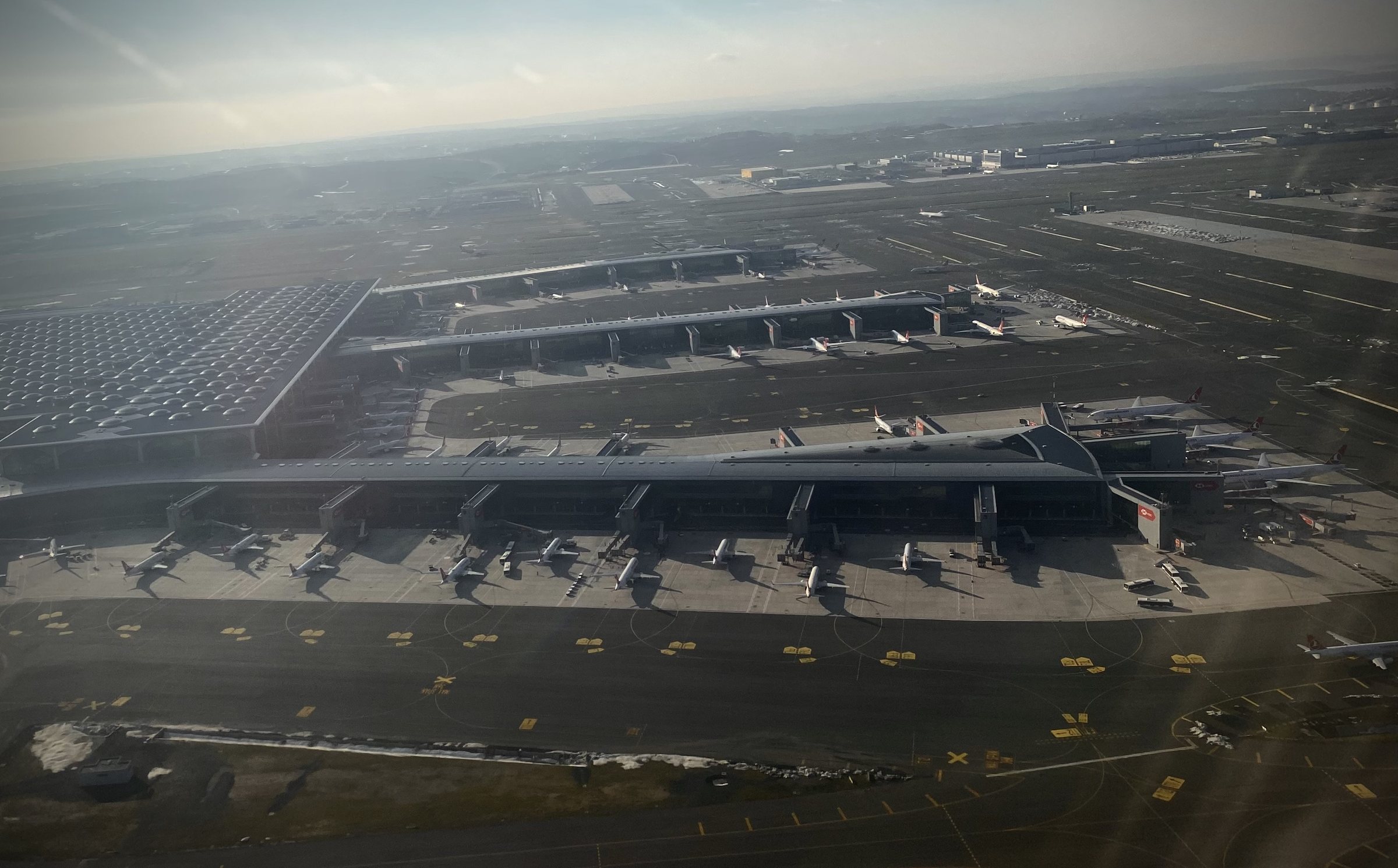
Aerial view of Istanbul Airport

The ground

Built over abandoned mines

The site is 7,600 hectares at Arnavutköy, near Lake Terkos on the Black Sea coast. It was not empty land: the area had been dug for sand, gravel and lignite for years. Sixteen licensed mines sat inside the project area, and the old open pits were backfilled with soil.

Those excavations left 70 separate bodies of water behind — from 0.17 to 100 hectares each, 610 hectares in total. The ground under the runways is a mining landscape, rebuilt.

From orbit: 2017 → 2025

Sentinel-2 · 10 m resolution · each frame from one cloudless summer day

2017

Watch the runways and the terminal appear — and the quarry lakes around them. The frames are matched to a common exposure, otherwise the sequence would show the season changing rather than the airport; the colour difference that remains is real, as the summer of 2025 was drier.

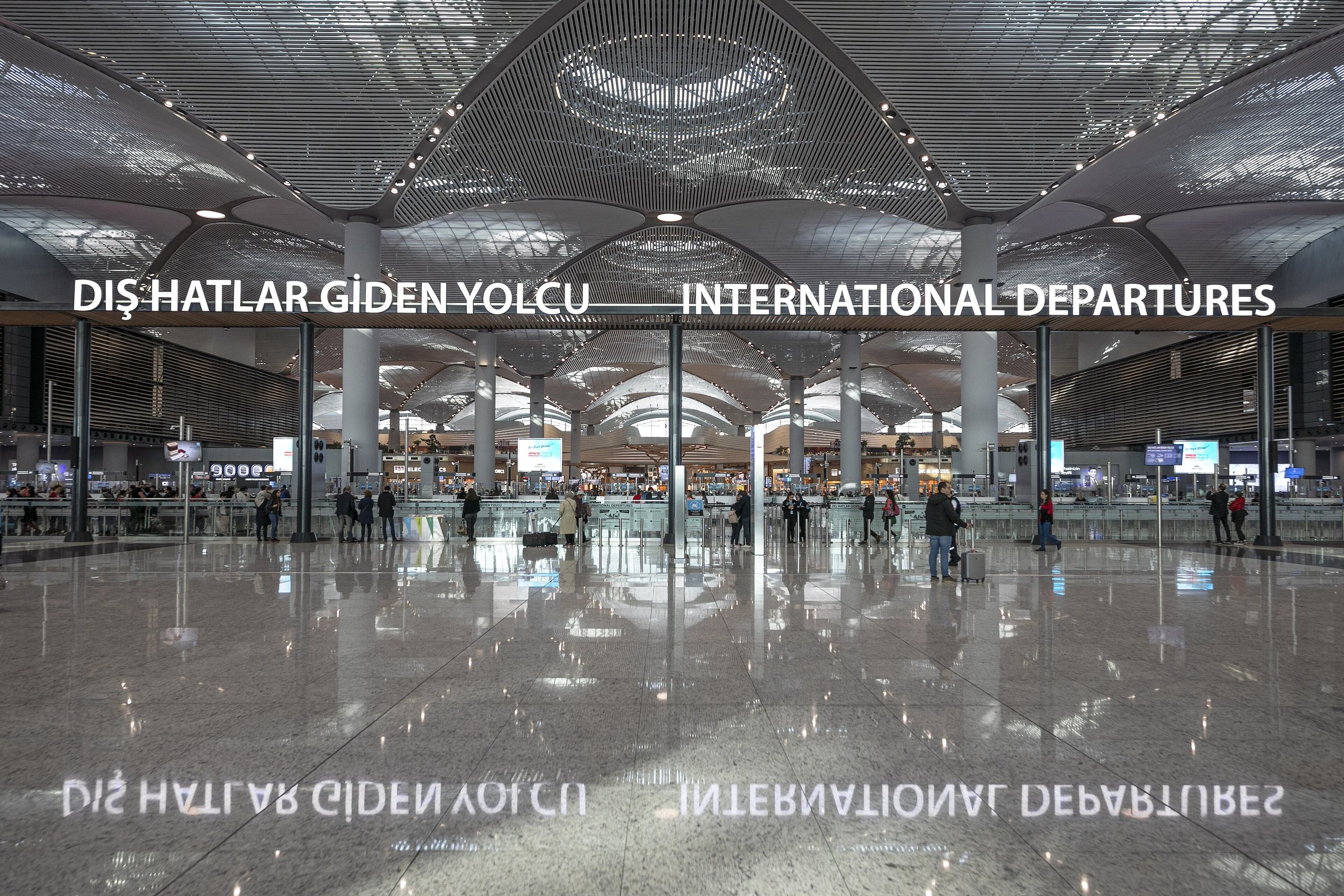
Istanbul Airport terminal entrance

29–31 October 2018 · opening

It opened, but it was not called IST

The airport was inaugurated on 29 October 2018, Republic Day. The first commercial flight left two days later: 31 October 2018, TK2124 to Ankara. Then almost nothing happened for five months — an average of 4 departures a day in November 2018.

Through this period the new airport's IATA code was ISL; IST still belonged to Atatürk. The codes had not yet changed hands.

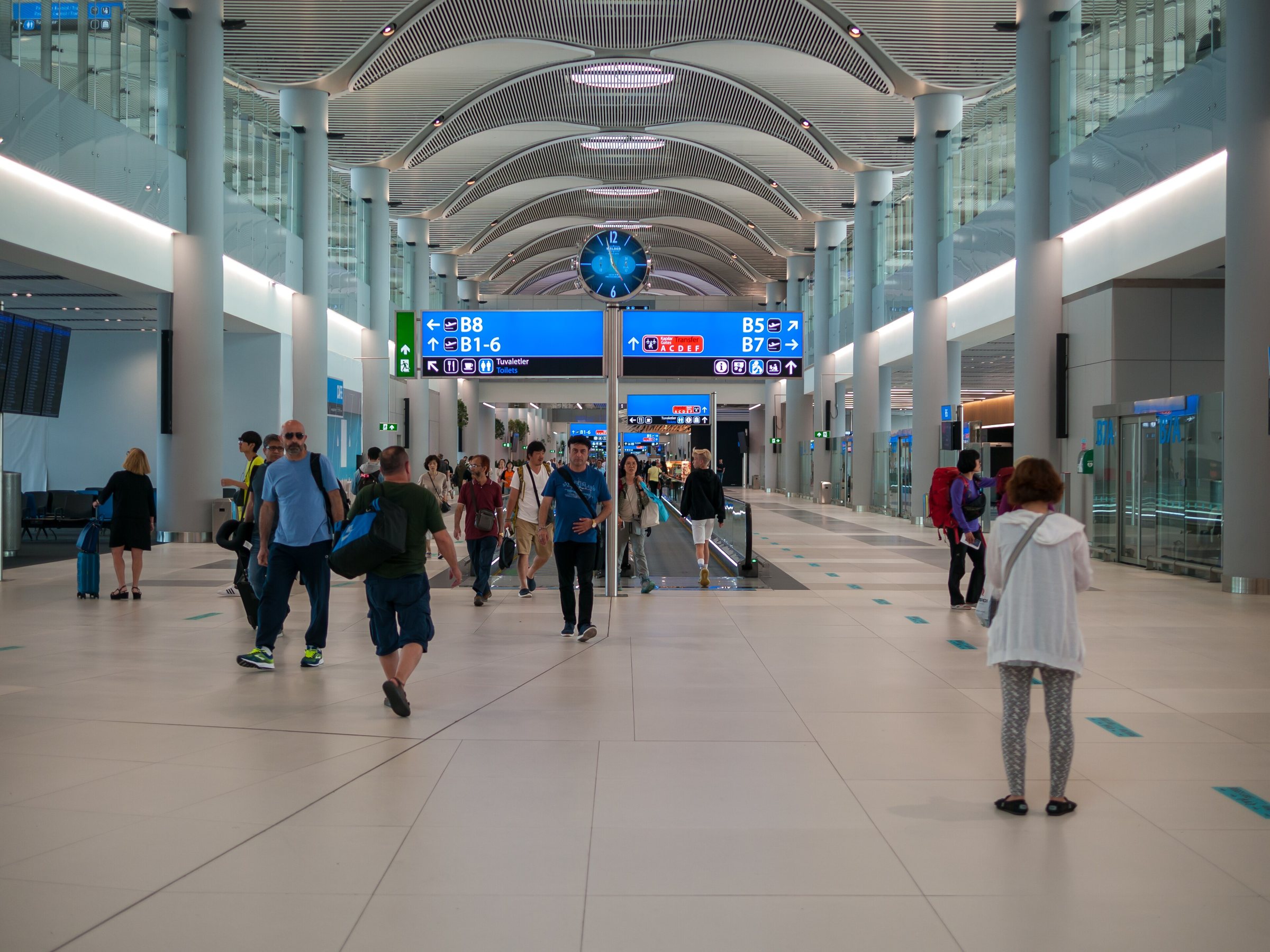
Istanbul Airport terminal interior

5–6 April 2019 · the Big Move

45 hours allowed, finished in 29

Atatürk closed to commercial traffic and every working part of an airport moved 40 km north: 686 trucks, 47,000 tonnes of equipment, 1,800 people. The load covered the area of 33 football pitches and the trucks drove 400,000 km between them. The state had allowed a 45-hour window; the operation finished in 29 hours.

And the codes swapped: IST moved to the new airport and Atatürk became ISL. In the data: 12 departures a day in January 2019 → 444 in April.

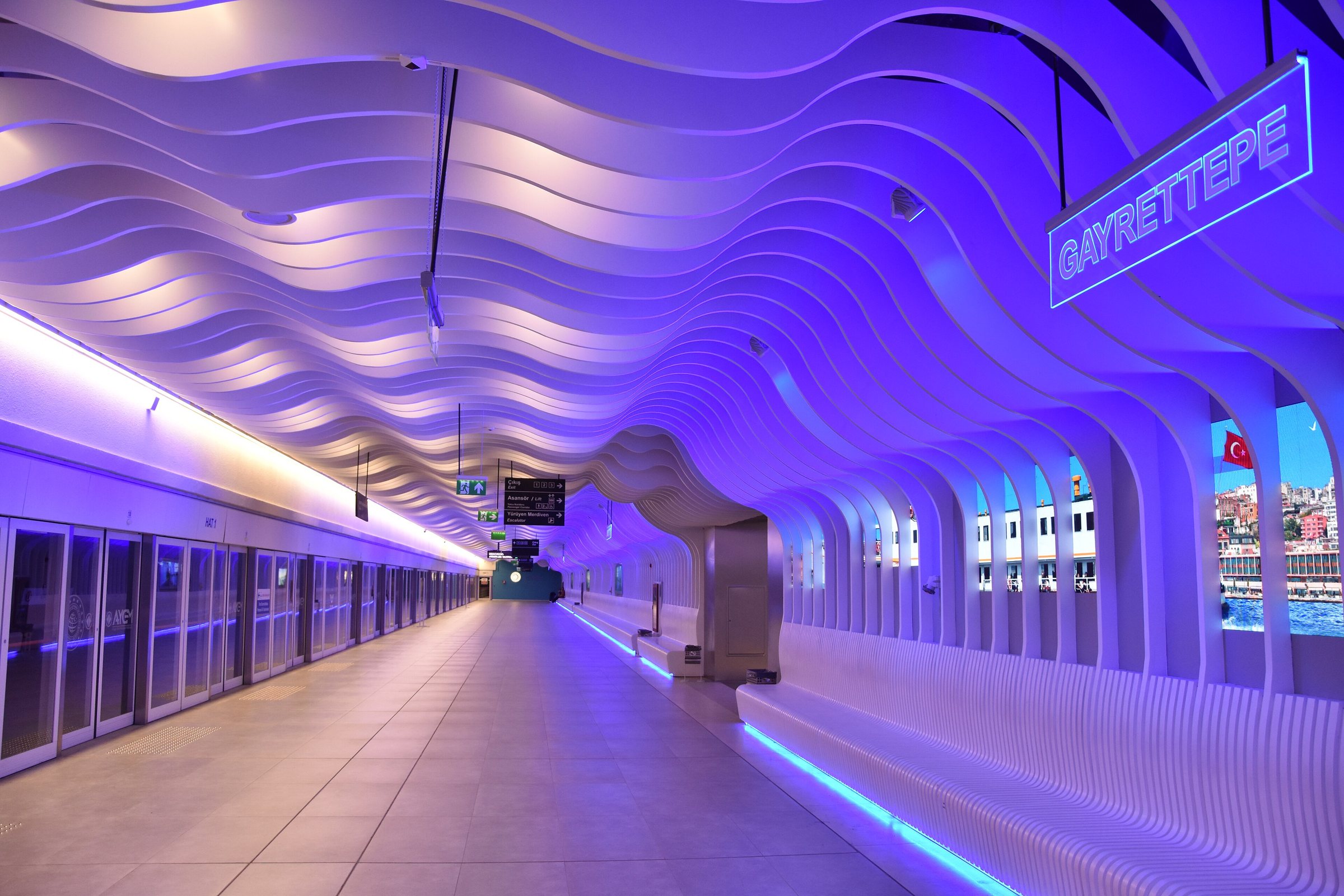
M11 metro station at Istanbul Airport

22 January 2023 · M11

A metro was built to reach it

The airport opened 40 km from the city centre, and for four years getting there meant the motorway. On 22 January 2023 the M11 line opened between Kağıthane and Istanbul Airport; the Gayrettepe connection followed in January 2024 and the Arnavutköy stops in March 2024.

At 120 km/h it is the fastest metro in Turkey, and the airport is about 30 minutes from Gayrettepe. Only at this point was it genuinely joined to the city.

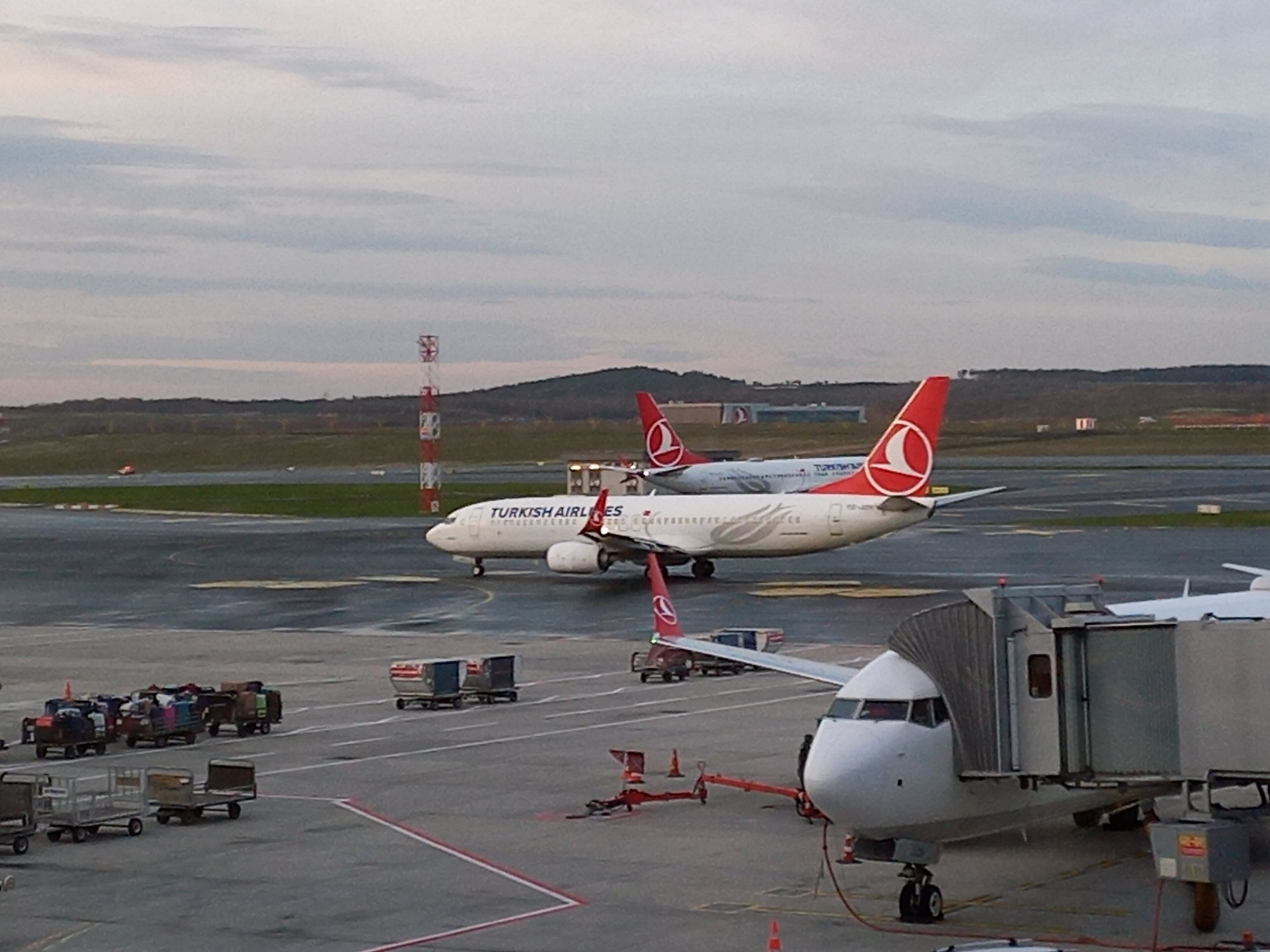
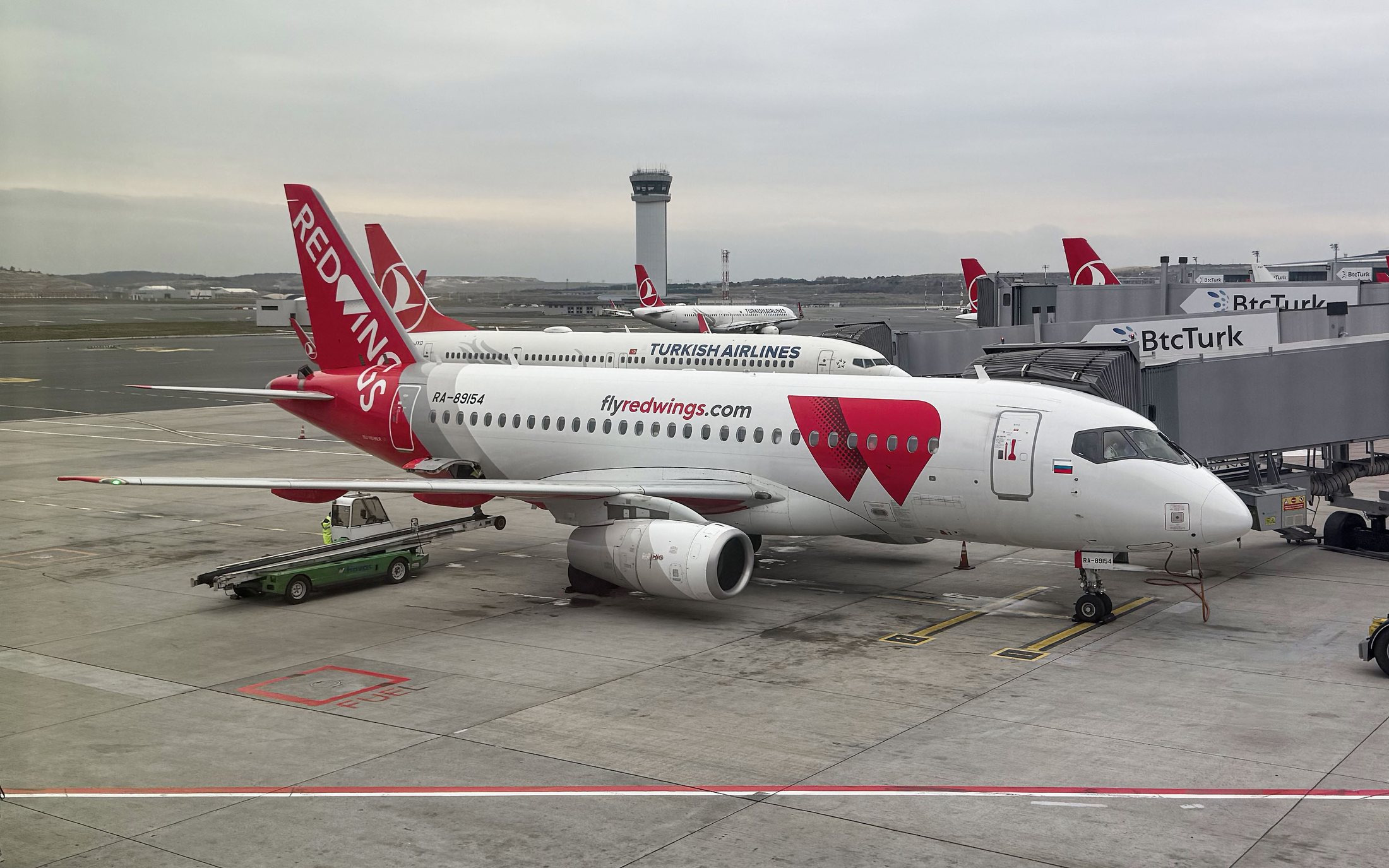
Turkish Airlines aircraft on the apron at Istanbul Airport A Red Wings Sukhoi Superjet on stand at Istanbul Airport

2025 · 1st in the world

327 destinations, 82,733 connections

IST is the world's 8th airport by traffic — but 1st by connections. In 2025 it offered 82,733 connections to 327 destinations, making it the most connected airport on earth. 750 departures a day, to four continents, most of them on widebodies.

Both are on IST's own apron: above, Turkish Airlines aircraft in front of the terminal; below, a Red Wings Superjet on stand with more Turkish tails behind it. That is the network on an ordinary day — the home carrier's schedule and foreign operators sharing the same concrete.

Passengers per year

millions · İGA / ACI World statements

annual capacity: 90 million

2022 is missing here: I could not source it to the same standard as the others, and a guessed bar is worse than a gap.

The record

Eight years, two measures.

Two separate charts, because these are two different units — movements and minutes. Stacking them on one axis with two scales would mislead.

Departures per day

monthly mean · LTFM · EUROCONTROL

Istanbul Airport mean daily departures by month, 2018–2026
Big Move · Apr 2019 Pandemic · Mar 2020 3rd runway · Jun 2020 Metro · Jan 2023

Delay per departure

monthly mean minutes · all causes · from 2021

Istanbul Airport mean pre-departure delay per departure by month
Snow · Jan 2022 Earthquake · Feb 2023
18,95 → 11,90 minutes · per departure

2022 → 2025 · the finding

Busier, and less late

In the first half of 2022 the airport was producing 18.95 minutes of delay per departure at 521 departures a day. By the first half of 2025 it was running 713 departures a day — far busier — and delay had fallen to 11.90 minutes.

Across the monthly record the correlation between how busy IST is and how late it runs is only +0.41. Snow closes the airport (25 January 2022: 15 departures), an earthquake fills it (February 2023: departures rose as delay climbed to 75 minutes) — two opposite fingerprints in the same data.

Sources and images

Every number here comes from somewhere countable.

Traffic and delay figures are from the EUROCONTROL Performance Review Unit's open datasets: Airport Traffic (daily IFR movements, 2018–2026) and All / ATC pre-departure delays (daily, all causes). © European Organisation for the Safety of Air Navigation (EUROCONTROL). The data may be reproduced in whole or in part providing this copyright notice and disclaimer are included; EUROCONTROL makes no warranty, implied or express, as to the accuracy, completeness or usefulness of the information, and the interpretations here do not necessarily reflect EUROCONTROL's official views. Satellite frames are Sentinel-2 L2A true-colour scenes (contains modified Copernicus Sentinel data 2017–2025) from the open archive on AWS. Ranking and passenger figures are ACI World and İGA statements. Tender, cost, site and metro details come from İGA's environmental impact assessment and contemporary reporting. I have not found an explanation for the 90.9 minutes per departure recorded on 1 October 2023 — traffic was normal that day.